Demand in terms of both leasing and investment for commercial real estate in the UK largely remained in positive territory in Q4 2025, despite the uncertainty caused by November’s Budget, according to Rightmove’s latest Commercial Insights Tracker.
Growth in demand was lower than in both the previous quarter and the same period in 2024. However, this was in part down to the timing of – and extensive speculation about – the Labour government’s second Budget, which took place unusually late on 26 November.
How did demand for commercial property perform in Q4 2025?
Demand to lease industrial property increased the most year on year, at 11%, followed by offices (2%) and leisure (1%). Leasing demand for retail properties fell by 4% over the same period. When it comes to investment demand, industrial fared best at a 12% increase, followed by offices (4%) and retail (3%). Demand for leisure fell by 7%.
What trends did we see in supply of commercial property?
At the same time, supply across all sectors ticked up when it came to leasing and all but leisure in terms of investment. At a time when demand is muted – or at least more muted – this is, perhaps, to be expected.
How has the office sector fared in 2025?
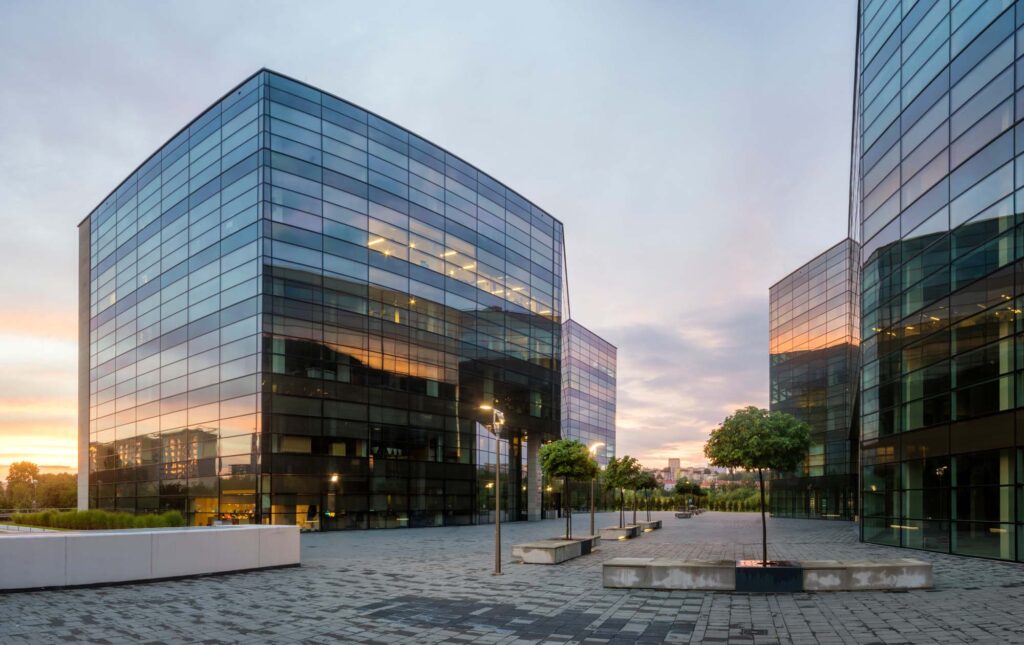
Demand to lease office space in some of London’s key business locations dropped by more than the national average, another signal that some business leaders adopted a wait and see approach at the end of 2025 due to the Budget – although this could also be due to tight supply at the prime end of the market.
Demand to lease office space in the City of London dropped by nearly a quarter compared to the same period a year ago (-24%), while in Westminster there was a drop of 8%.
What did the Budget include?
There was speculation in the months leading up to the Budget that there would be significant changes to the tax code, giving business leaders a reason to wait and see what would happen.
The Budget did indeed include a major shake-up of business rates. From April 2026, a new five-category multiplier structure will apply. Perhaps most prominently, it introduced a clear distinction between retail, hospitality and leisure properties and all other commercial properties, as well as a new band for high-value premises.
What do commercial property experts think about the commercial market?
“It seems that uncertainty in the run up to the Budget suppressed demand in some areas, but it’s positive that it mostly continued to grow year-on-year,” said Andy Miles, managing director, commercial, at Rightmove. “Some business leaders understandably delay their decision making when potentially large financial changes are just around the corner.”
Ali Rana, head of national investment at consultancy Carter Jonas, noticed the fall in activity well before the Budget took place. “Concerns surrounding the forthcoming November Budget are dampening transaction activity,” he told BE News at the start of November.
“Uncertainty over potential tax changes and business rates reform is prompting some investors to delay decisions until policy clarity emerges. Nonetheless, stabilising rental performance and improving yield dynamics are providing encouraging signs for 2026.”
Hesitancy also showed up in the RICS Commercial Property Market Survey in the run up to the Budget, with multiple respondents citing fiscal uncertainty. Chris Thomas from Christopher Thomas & Co was typical. “Concerns about wider economic and fiscal outlook combined with questions over interest rates, stubborn inflation and a delayed Autumn Budget are stifling short term market activity,” he told RICS. “This has created a ‘wait and see’ stage to the market cycle, primarily caused by weak, poor messaging and lack of direction by the current Labour administration.”
How will the commercial property market perform in 2026?
However, the consensus is that 2026 is set to be a more positive year for commercial property. “With interest rate expectations becoming more predictable and inflation appearing to have peaked, reduced development pipelines are helping to underpin a gradual recovery in investment activity, particularly in prime industrial assets and offices suited to refurbishment, repositioning or conversion to alternative uses,” Rad Radev, associate researcher at Carter Jonas, told BE News.
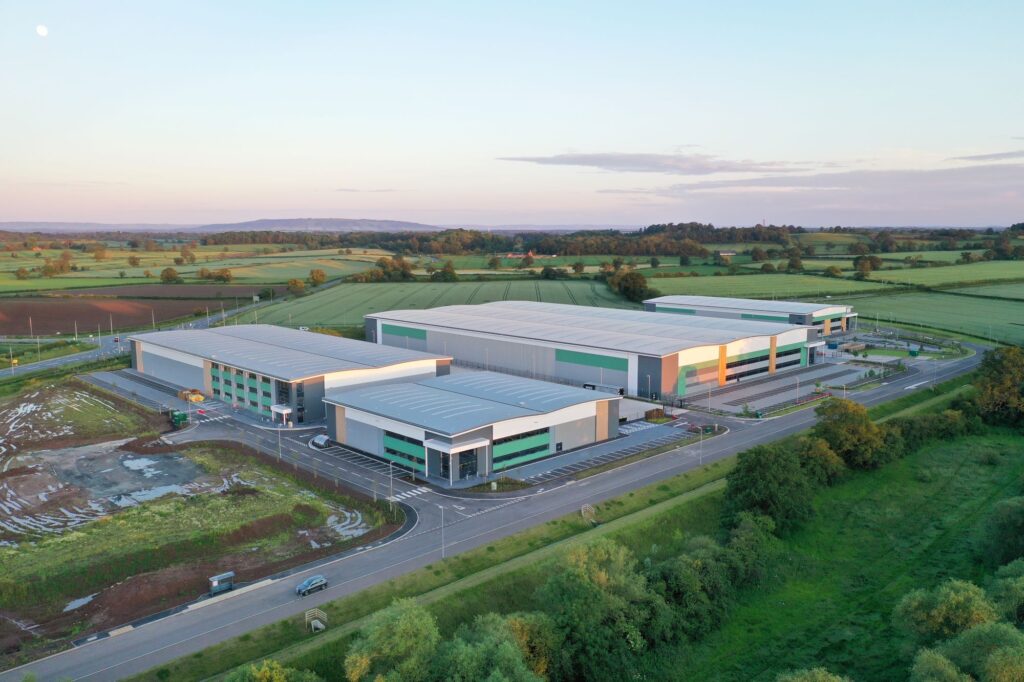
Miles agrees, noting that the Rightmove figures for the last quarter of 2025 remain robust, perhaps surprisingly given the uncertainty caused by the Budget. “There are positive signs ahead for the rest of 2026,” he said.
“Not only is demand largely higher than last year, but we are expecting to see further interest rate cuts starting later this year, which would help to make commercial property investment more attractive and viable to some investors. It’s still a difficult cost climate for many businesses, but stable demand to lease commercial space and interest rate reductions for investors would help to create some momentum for the 2026 market.”
Darren Bond, Global Managing Director at Christie & Co, agrees. “We are optimistic about the market outlook for our specialist sectors,” he says. “The visibility and pipeline of transactions anticipated to happen in the first half of the year are encouraging when compared with the same period a year ago.”
He adds: “There is no doubt that cost pressures will continue to put a strain on businesses, and the economic environment will be more challenging in the year ahead. As long as demand remains at the current level, with bank funding readily available, then we see no reason why market sentiment shouldn’t be maintained and even surpass the levels seen in 2025.”
At the same time, Christie & Co expects to see continued financial distress and an increase in non-performing operational real estate in the year ahead, fuelling demand for restructuring and insolvency services.
“Economic challenges and financial pressures were catalysts for a rise in business distress in 2025,” says Stephen Jacobs, Director – Bank Support & Business Recovery, at the company.
“We expect these conditions to persist in 2026, presenting opportunities for well-funded and speculative investors to acquire non-performing operational real estate that will come to market as a consequence of business distress and failure.”
In normal times, this would have negative implications for commercial property, but Mat Oakley, Director, Commercial Research, at Savills, says that he doesn’t believe that will be the case in 2026.
“With November’s Budget now finally out the way, in the short- to medium-term the outlook is certainly more stable than it has been for some time,” he says. “Businesses and investors should now be more capable of making balanced decisions than they were six months or a year ago, and therefore move forward with decisions about transactions.”
He adds: “Nonetheless, the environment for economic growth remains sluggish. In a ‘normal’ cycle, this would feed through to weaker occupational demand across all the key commercial property sectors – offices, industrial and retail – however, a lack of supply and a dearth of construction activity is likely to keep demand robust.”
Sources:
Rightmove Commercial Q4 2025 Insights Tracker
RICS Commercial Property Market Survey
Copyright © 2000-2026 Rightmove Group Limited. All rights reserved. Rightmove prohibits the scraping of its content. You can find further details here.


