Wark Estate & Tweed Fishings, Wark, Cornhill on Tweed

- PROPERTY TYPE
Farm Land
- BEDROOMS
6
- BATHROOMS
6
- SIZE
Ask agent
Description
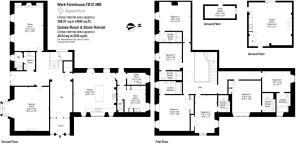
Two reception rooms, six ensuite double bedrooms - fully modernised
THREE ESTATE COTTAGES
FARM STEADING
Range of modern and traditional buildings | Commercial workshop units
LAND
731.7 acres arable and temporary grass (mainly irrigable) | 86.7 acres permanent grass and rough grazing | 79 acres woodland
TWEED FISHINGS
South Wark Beat - 2.3 miles right bank | 5 year average: 136 salmon, 18 sea trout
Lower North Wark Beat - 1.4 miles left bank | 5 year average: 233 salmon, 20 sea trout
SPORTING RIGHTS
Established low ground shoot with potential to expand | Roe stalking
ABOUT 967.8 ACRES (391.7 HECTARES) IN TOTAL
FOR SALE BY PRIVATE TREATY WITH VACANT POSSESSION
AS A WHOLE OR IN THREE SEPARATE LOTS
SITUATION
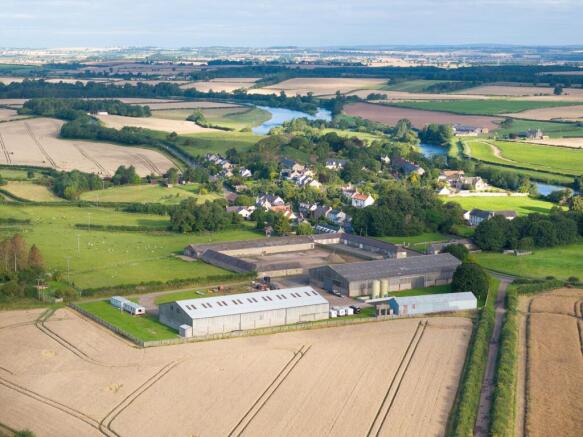
This famous Border Estate is beautifully located in and around the historic hamlet of Wark on the banks of the River Tweed in a first class arable farming area.
The B6350 secondary road passes through Wark and connects to major arterial roads at both Kelso and Cornhill and these in turn provide direct access to Edinburgh and Newcastle, both of which have international airports. Additionally, there is a mainline railway station at Berwick (15 miles) which provides regular services to Edinburgh and Newcastle (45 minutes) and London (3¾ hours).
The village of Cornhill provides good local amenities which include the Collingwood Arms Hotel, an excellent village shop and a farm machinery dealership, whilst the busy market towns of Kelso and Berwick offer a wider choice of services. There is a good selection of local state schools for all age groups and a number of private schools in and around Edinburgh in addition to those at Longridge Towers, Berwick and St Mary's, Melrose. The farming community is well served by numerous agricultural suppliers, grain and machinery merchants and there are livestock markets at Wooler (14 miles) and St Boswells (18 miles).
North Northumberland and the Scottish Borders is a genuinely rural area of low population and high amenity. The region is famed for its beautiful scenery and varying landscapes which range from the high tops of the Cheviot and Lammermuir hills through rolling wooded lowland countryside to the fertile farmland of the Tweed Valley and beyond to the rugged cliffs and golden sands of the east coast. The Estate is ideally placed to enjoy all of the recreational, sporting and cultural opportunities for which the area is justifiably renowned.
HISTORICAL NOTE
The history of the Estate dates back at least to the early 12th century when Henry I granted the Barony of Wark to Walter L'Espec, Lord of Helmsley. He completed the construction of Wark Castle, around which the medieval village subsequently grew, by about 1130.
Together with the castles at Ford, Etal, Duddo, Norham and Berwick, Wark was regarded by successive English monarchs as a formidable defensive fortress against ongoing Scottish invasions and Border raids.
The Barony passed into the possession of the powerful Roos family in 1191. In 1216 the castle was burnt to the ground by King John when in the possession of Robert Roos, one of the Barons who subsequently forced John to grant the Magna Carta. The castle remained at the epicentre of the Anglo-Scottish wars throughout the Middle Ages and was captured by the Scots in both 1375 and 1460 and lastly by James IV in 1513 before the Battle of Flodden. During this period the Barony passed to William Montague (later Earl of Salisbury) in 1329 and, indeed, Edward III originated the famous Order of the Garter in 1348 when the Countess of Salisbury "dropped a garter" whilst dancing with the King at a ball held in the castle hall. After the union of the Scottish and English crowns in 1603 the castle passed out of the pages of English history with its final abandonment in 1633 when all artillery were finally withdrawn.
Following the death of Viscount Grey of Glendale and Earl of Tankerville in 1701, the entire Estate was partitioned with the Earl's only daughter, Mary, Lady Ossulston, being awarded the Tankerville Estate of which Wark formed part. The Tankerville Estate was finally broken up in 1913 although Wark itself was not sold until 1920 when purchased by Captain Samman of Willerby Manor, near Hull. It was acquired by the Lovett family in 1960 and is now being sold for only the second time in over one hundred years.
THE MANOR OR LORDSHIP OF WARK
The sale of lot 1 will include such right, title, estate and interest in the Manorship as the Trustees can convey.
GENERAL DESCRIPTION
The sale of Wark Estate provides a rare opportunity to acquire an exceptional agricultural and residential Estate with the added attraction of two prime salmon beats on the River Tweed.
The Estate was purchased by the late Haddon Lovett in 1960 and includes, as its focal point, Wark House, a charming easily managed compact country house situated on the north east edge of the hamlet. The house was extensively refurbished in 2022.
Additionally, there are three further dwellings - Steward's Cottage, Shepherd's Cottage and The Boathouse - the last of which is occupied by the head boatman.
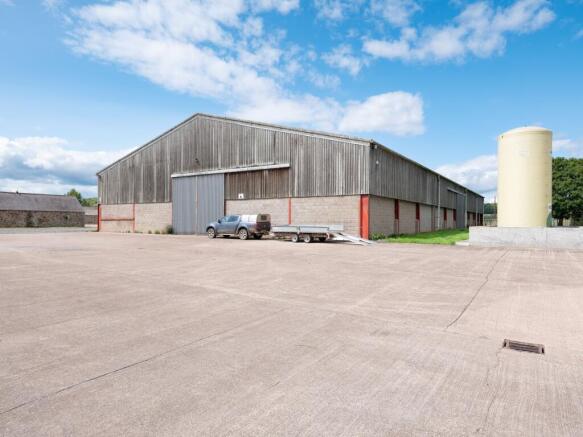
The steading is centrally positioned within the Estate and includes two large modern portal framed buildings, various traditional buildings and a further range of traditional buildings which were converted in 2002 to form three double workshop units.
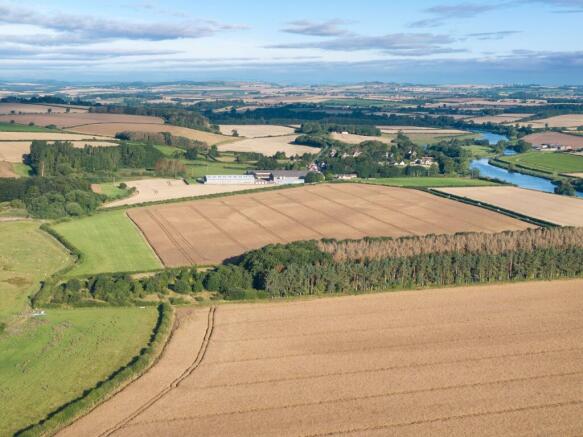
The Estate is relatively compact and well shaped and lies between the 15 metre and 60 metre contours. Average annual rainfall is approximately 715mm. Most of the land is classified as grade 2 with the remainder grade 3. The land adjacent to the Tweed and either side of the B6350 is comparatively flat with rich, deep, virtually stone free, permeable alluvial sandy silt loams (Alun Series). On the slightly more elevated land to the south soils mainly comprise fertile sandy clay loams with a variable clay fraction (principally Wick and Flint Series). Throughout the Estate soils are for the most part easily worked and relatively free draining.
The arable land is characterised by large, well shaped fields which are eminently suited to modern farming practices. Field drainage is good, soil indices are excellent and the land is clean with no significant weed ingress. Fences are serviceable to the permanent grass fields and throughout the Estate there are numerous well maintained hedges, mainly populated with quicks, which have been rejuvenated under Stewardship. Virtually all fields are accessible either directly off the public road or via internal hard tracks.
The arable land has been farmed on a contract farming basis with McGregor Farms since 2003 with the principal crops being winter wheat, winter oilseed , vining peas and potatoes. There is a current abstraction licence and most of the farm is irrigable with fixed pipework in strategic locations. The arable land is capable of consistently producing above average yields and has been farmed to a first class standard. The permanent grass is licensed for seasonal grazing.
The Estate includes two prime salmon beats on the "Lower Tweed" which, historically, is the most consistently productive part of the Tweed system accounting for over 50% of the total catch return. The inclusion of Lower North Wark lying directly opposite South Wark is hugely advantageous as it provides 1.4 miles of double bank fishing. Additionally, the two beats are extremely complementary, with South Wark generally fishing better at medium to high river levels whilst Lower North Wark is primarily a low - medium water beat. The five year combined average catch is 369 salmon and 38 sea trout.
TWEED FISHINGS
The River Tweed is the second largest salmon river in Scotland and has an internationally famous reputation as one of Europe's great salmon rivers.
The management of the river is undertaken by the River Tweed Commission which is charged with the responsibility for the preservation and enhancement of both migratory and freshwater fish throughout the Tweed system and, in particular, with the regulation of the various fisheries. The Commission directly employs bailiffs to police the river and to ensure that the Tweed Angling Code is effectively maintained. The associated Tweed Foundation is engaged in an extensive programme of objective scientific research, biological monitoring and habitat enhancement with the aim of maximising the river's natural productivity, whilst the Tweed Forum brings together a variety of interests to champion the sustainable management of the entire Tweed catchment. The RTC is funded by the Tweed Levy, an annual charge raised on each fishery and assessed on the five year rolling average catch of salmon and sea trout.
The season runs from 1 February to 30 November. Fishing is fly only on or before 14 February and on or after 15 September. The Commission now operates a 100% catch and release policy.
The lighter spring migration runs from the start of the season until early June when the main summer run commences and continues through until late August. The grilse run usually starts in late July and there can be exceptional runs of sea trout, particularly in the mid summer months through until late September, depending upon water conditions. Although the autumn run has now virtually disappeared, there have been encouragingly large numbers of summer fish in recent seasons of which significant numbers were two sea wintered.
WOODLAND
The woodland extends to approximately 79 acres in nine main compartments scattered throughout the Estate and much of this is now semi-mature or mature and at commercial production stage. Some of the woods have recently been thinned following Storm Arwen, but remain relatively well stocked. The principal species include Scots pine, spruce, larch, Douglas fir and mixed broadleaves, particularly sycamore, beech and oak.
The woodland, together with the numerous well stocked hedges which run through the Estate, adds considerably to the diversity of wildlife habitat and its overall amenity and sporting potential. There are no current Forestry England schemes in place.
SHOOTING
Pheasants are released each year and the woodland, together with the Stewardship cover, provides the basis for a good low ground shoot with scope for further development, particularly with the planting of cover crops. There are a string of ponds in the Parkhill plantation and a further small pond at the south end of field 7930.
The Estate supports a healthy population of roe deer which provide interesting stalking opportunities.
ENVIRONMENTAL STEWARDSHIP
The Estate is covered by an Environmental Stewardship Agreement (Ref: AG00307427) which runs until 29 February 2028. The Agreement currently pays annual grants of £44,804 and embraces a wide range of arable, grassland and boundary management options.
The Purchasers will be obligated to take on the Scheme and to indemnify the Vendors against any future breaches.
PLANNING
The Vendors have not proactively pursued development prospects in and around the village fringe. The Northumberland Strategic Housing Land Availability Assessment (SHLAA) has registered 1.1 acres on the west side of field 6472 (Ref: 1191) as being suitable for the development of five houses on an 11-15 year time horizon. In time there will, almost inevitably, be further small development prospects on the village edge.
LOTTING
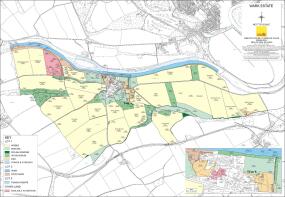
The Estate is offered for sale either as a whole or in three separate lots:
Lot 1
Wark Estate (906 acres)
* Wark House and two cottages
* Range of modern and traditional farm buildings
* Commercial workshop units
* 731.7 acres arable and temporary grass, 71.7 acres permanent grass and rough grazing and 77.8 acres woodland
* Low ground shoot with potential to expand
* Roe stalking
Lot 2
The South Wark Salmon Fishings (61 acres)
* 2.3 miles right bank fishing
* Five year average catch: 136 salmon, 18 sea trout
* Boatman's house and attached Fishermen's Quarters
* 16.2 acres grazing and riverbank
Lot 3
The Lower North Wark Salmon Fishings
* 1.4 miles left bank fishing
* Five year average catch: 233 salmon, 20 sea trout
* Fishing hut
In the event that lots 1 and 2 are sold separately, each individual lot will be granted such rights as are necessary to enable it to be properly serviced and enjoyed.
ADDITIONAL DWELLINGS
The Estate owns four further dwellings which are available by separate negotiation if required. These include:
Kaim House - constructed in 1985 and situated approximately 0.5 miles west of the village in a lovely private setting, this attractive house includes three reception rooms, four bedrooms and approximately 22.4 acres.
Kaim Lodge - this fully modernised three/four bedroomed detached house is situated approximately 150 metres to the south east of Kaim House.
Nos 1 and 2 Blue Row Cottages - A pair of semi-detached, single storeyed, three bedroomed, traditionally constructed cottages occupying an elevated position close to the centre of the village. The area of land included to the north may be suitable for residential development - subject to all requisite consents.
Further particulars are available on request.
Council Tax Band: D (Northumberland County Council)
Tenure: Freehold
Brochures
BrochureEnergy Performance Certificates
EPCWark Estate & Tweed Fishings, Wark, Cornhill on Tweed

NEAREST STATIONS
Distances are straight line measurements from the centre of the postcode- Berwick-upon-Tweed Station13.9 miles
About Edwin Thompson, Berwick-Upon-Tweed
44-48 Hide Hill, Berwick-Upon-Tweed, TD15 1AB


Notes
Disclaimer - Property reference RS0263. The information displayed about this property comprises a property advertisement. Rightmove.co.uk makes no warranty as to the accuracy or completeness of the advertisement or any linked or associated information, and Rightmove has no control over the content. This property advertisement does not constitute property particulars. The information is provided and maintained by Edwin Thompson, Berwick-Upon-Tweed. Please contact the selling agent or developer directly to obtain any information which may be available under the terms of The Energy Performance of Buildings (Certificates and Inspections) (England and Wales) Regulations 2007 or the Home Report if in relation to a residential property in Scotland.