Greener Homes Report 2026

Foreword
Britain’s relationship with greener homes is changing. Nearly two-thirds of movers (63%) want their home to generate most or all of its own energy, reflecting growing interest in lower running costs, energy independence and homes that are better prepared for the future.
Our research shows this is about more than energy bills. Nearly half of people say their home struggles in hot weather, while almost nine in ten say staying cool in summer is important when choosing a home. Demand for homes with heat pumps has risen 83% since 2022, and demand for solar panels is up 61%.
There are signs of progress, too. Almost half (49%) of homes for sale and 61% of rental homes are now rated EPC C or above, although cost remains a significant barrier to making greener improvements.
Now in its fifth year, Rightmove’s Greener Homes Report combines our market-leading data with the views of homeowners, renters and landlords across Great Britain to explore how our housing stock and attitudes towards greener homes are changing.
Key takeaways
63%
would ideally like a home that is fully or mostly self-sufficient for energy
87%
say a home’s ability to stay cool is important when choosing their next home
49%
of homes for sale are rated EPC C or above, up from 40% five years ago
61%
of homes for rent are rated EPC C or above, up from 52% five years ago
89%
of new-build homes are rated EPC A or B, compared with just 6% of resale homes
78%
of renters support action to help make homes greener
Chapter 1: The year of energy independence

For years, greener homes have largely been associated with greater energy efficiency and lower household bills. Those benefits remain important, but the conversation is broadening as movers consider not only how much energy their home uses, but where that energy comes from and how much control they have over it.
Continued pressure on household finances, energy market uncertainty and more extreme weather are putting a greater focus on how homes perform. Technologies such as solar panels and battery storage can give households more control over the energy they generate and use, while helping to reduce their reliance on the grid and potentially lower costs.
While households are no longer experiencing the acute bill shock of the 2022 energy crisis, the experience of recent years has reinforced the value of having greater control over household energy. In 2026, energy independence is becoming a more important part of what a greener home can offer.

“This Rightmove Greener Homes eport shows a massive shift in consumer sentiment around electrification at home – the turbulence in the Middle East means people are voting with their feet, Octopus has seen demand for heat pumps double, and solar and EVs surge.
Greener homes are not only cheaper to run, they also reduce our reliance on a system still controlled by global fossil fuel markets. They mean we take back control of our energy bills, and our independence.”
Greg Jackson, Founder and CEO, Octopus Energy
The rise of a self-sufficient home
Our research found that 63% of people would ideally like a home that is fully or mostly self-sufficient for energy.
Meanwhile, 53% say recent energy price rises have increased their interest in technologies such as solar panels and battery storage. Just 8% say they would prefer to remain fully reliant on the grid.
For many households, the appeal is no longer solely about reducing monthly bills. It is increasingly about creating homes that can generate, store and use their own energy. We spoke to some people about their experience living with solar panels:
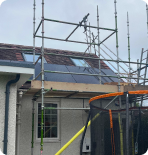
“We live in a four-bedroom converted 1960s bungalow on the edge of Edinburgh. We’d wanted solar panels for years, but our previous home was in a conservation area, so it wasn’t an option for us. With two electric vehicles and electricity costs continuing to rise, investing in solar felt like a sensible next step, so we had them fitted during summer 2026.
The installation was straightforward and took around two weeks from start to finish. We’ve also added a battery, which lets us store energy and make the most of cheaper overnight tariffs. Day to day, it’s incredibly simple to use, and we’re already seeing the benefits. Long term, we’re hoping the system will pay for itself while potentially adding value to our home.”
Mark, homeowner living with his family in Edinburgh
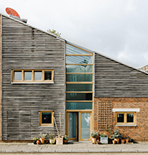
“When my husband and I bought our first home in South London in December 2024, we were drawn to its energy-efficient design and the fact it forms part of one of the UK’s first major zero-carbon communities.
The home’s solar-powered features were already in place, and they’ve given us real peace of mind. We don’t need to change our day-to-day habits, but we know we’re living more sustainably and are less affected by fluctuating energy prices. That combination of environmental benefit and financial certainty is hugely reassuring, and I’d encourage anyone considering solar panels to explore the option.”
Meg, first-time buyer living in Sutton, South London
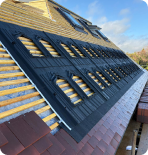
“As we were building a new-build home and having to install a completely new roof anyway, adding solar panels felt like a natural choice. We chose an integrated system, which is much more discreet than traditional panels and blends seamlessly into the design of the house. It also made financial sense, as much of the cost would have been in the scaffolding and installation infrastructure, so we were able to benefit from efficiencies by carrying out the work while the house was already being built. It’s still a long-term investment, but the payback periods are much shorter than they used to be.
Since installing the solar panels and a home battery, we’ve become much more aware of how we use energy. What we love most is how hands-off the whole system is. The AI technology automatically optimises when the battery charges and when excess electricity is sold back to the grid, helping us save, and even make, money without having to constantly monitor it ourselves. In just three months, the system has been worth over £700 to us.
We also combine the system with our heat pump, creating a more efficient and sustainable home. Looking ahead, we’d love to add an electric vehicle and charger, allowing us to further integrate renewable energy into our everyday lives and become even more energy independent. It’s exciting to see how all these technologies can work together as part of a single, connected energy ecosystem.”
Sue, homeowner living in a self-build, South East
Green features are becoming more visible
Since 2022, mentions of heat pumps in newly listed homes have risen by 151%, while mentions of solar panels are up 94% and electric car chargers up 79%.
Buyer interest has grown alongside this, with demand for homes featuring heat pumps up 83% and solar panels up 61%.
| Green features | % change in listing mentions since 2022 |
|---|---|
| Heat pump | +151% |
| Solar panels | +94% |
| EV charger | +79% |
Regional spotlight on ‘solar panels’ in new listings
The number of newly listed homes advertised with solar panels has nearly doubled across the UK since 2022, with Scotland recording the largest rise at +148%.
| Region | Increase in new listings mentioning ‘solar panels’ |
|---|---|
| Scotland | +148% |
| West Midlands | +129% |
| Wales | +124% |
| East of England | +98% |
| South West | +97% |
| North West | +95% |
| Greater London | +94% |
| North East | +91% |
| South East | +84% |
| East Midlands | +78% |
| Yorkshire and the Humber | +53% |

“Scottish buyers are far more aware of running costs than they were five years ago, so solar panels are increasingly seen as a valuable added feature. While they are rarely the deciding factor in a purchase, they can help future-proof a home and provide reassurance around energy bills.
“The rise in listings mentioning solar panels is likely a reflection of both increased homeowner investment in energy efficiency and the growing number of newer-build homes entering the resale market. Buyers still prioritise location, lifestyle and the overall quality of a home, but energy-efficient features are becoming an increasingly attractive part of the package.”
John Wybar, Director of Edinburgh Residential Sales, Rettie
Chapter 2: Climate resilience

Hotter summers, changing expectations
For decades, Britain’s homes have been designed primarily to keep people warm. This year after several unprecedented heatwaves, households are asking a different question: Can my home keep me cool?
A summer of record temperatures has brought climate resilience into sharper focus. Our research found:
Searches for homes for sale on Rightmove with air conditioning more than doubled this summer, up 104% compared with the same period last year, with 61% considering installing it.
Cooling homes without using more energy
The challenge facing households is not simply installing air conditioning. While air conditioning can improve comfort, it can also increase electricity use.
Instead, many experts see the future of climate-resilient homes as a combination of:
- Better insulation
- Effective shading
- Improved ventilation
- Smarter home controls
- Heat pumps that can provide cooling as well as heating where appropriate
- Solar panels and battery storage that help support household energy needs
The question is no longer just how homes stay warm in winter, but how they remain comfortable all year round.

“74% of the new homes we delivered in the last year were fossil-fuel-free, incorporating low-carbon heating technologies such as air source heat pumps.
“As temperatures rise and extreme weather events become more frequent, designing homes that stay comfortable in hotter summers will become increasingly important. Our approach focuses on fabric-first design, using measures such as solar shading, glazing and ventilation to help keep homes cooler naturally, while avoiding the additional energy demand associated with air conditioning.
“We are continuing to explore new technologies and design solutions that can improve thermal comfort and climate resilience without increasing energy consumption.”
Brody Isaac, Head of Sustainability at The Hill Group
Access to climate-ready technology remains uneven
Many of the features associated with energy efficiency and climate resilience appear more often in higher-priced homes. Average asking price of homes with the following features (September 2026):
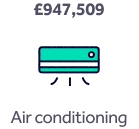
(+158% vs national
average house price)

(+48% vs national
average house price)

(+23% vs national
average house price)
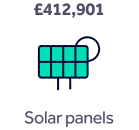
(+12% vs national
average house price)
This compares with an average asking price of a home of £367,440 (September 2026). Properties advertised with air conditioning have an average asking price nearly £580,000 above the national average.
The challenge for Britain’s existing homes
Many of the UK’s homes were built for a time when energy was cheaper and summers were cooler.
Improving resilience will therefore require practical, property-specific upgrades, rather than one solution applied to every home.
Five green upgrades that give you the biggest EPC boost
Rightmove analysis found that some of the most effective improvements don’t require major renovation work.
| Improvement | Typical cost | EPC points gained | Cost per EPC point |
|---|---|---|---|
| Hot water cylinder insulation | Around £15-£30 | 7.9 | £2.87 |
| Draughtproof single-glazed windows | Around £80-£120 | 7.1 | £14.17 |
| Low energy lighting for all fixed outlets | Around £38 | 2.3 | £16.60 |
| Increase loft insulation to 270mm | Around £100-£345 | 6.6 | £33.71 |
| Hot water cylinder thermostat | Around £200-£400 | 8.3 | £36.27 |
While larger investments such as solar panels and heat pumps can make a significant difference to a home’s energy performance, some of the cheapest improvements can deliver surprisingly strong EPC gains for a relatively low upfront cost.
Many homeowners will use a renovation project, such as adding as an extension, as an opportunity to add green features to their home:
“An extension or major renovation is a natural point for people to think about the performance of their whole home. They’re already making decisions around insulation, glazing, heating and energy use, so it creates an opportunity to improve the existing home at the same time as adding space.” Mark Hood, Head of Architecture at Resi
Chapter 3: New-build homes power Britain’s greener future

The energy efficiency advantage
Britain’s newest homes already demonstrate what can be achieved when energy efficiency and modern technology are designed in from the start.
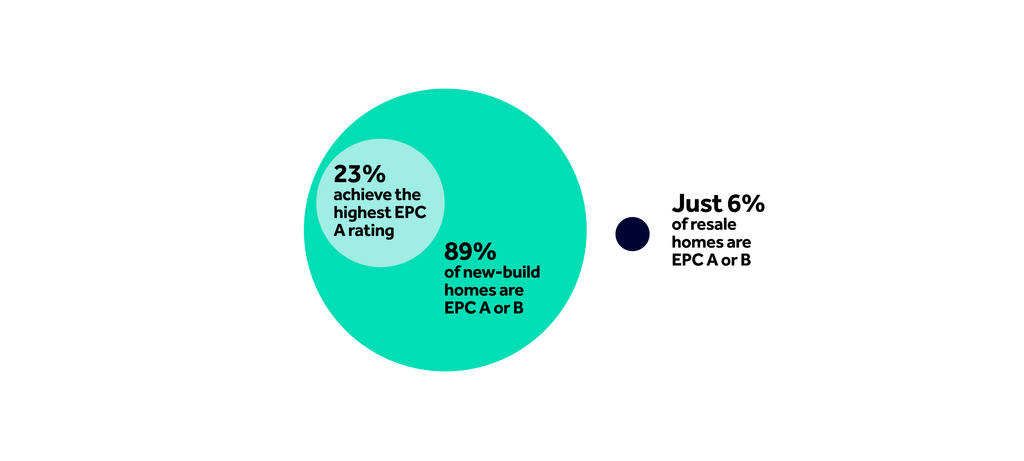
Top regions for EPC A-rated new-build homes
| Region | Percentage of new-build homes achieving A rating |
|---|---|
| Wales | 54% |
| North East | 44% |
| East Midlands | 31% |
| South West | 29% |
| West Midlands | 28% |
Built for energy independence
Depending on the development, new homes can include high-performance insulation, solar panels, heat pumps, electric-vehicle charging, efficient glazing, battery-ready infrastructure.
Building these features in from the outset can be more straightforward than retrofitting them later.
However, specifications vary by developer. Buyers should check what is included in an individual home and ask for information about its energy performance and likely running costs.

“With household budgets under pressure, people are paying closer attention to the ongoing cost of running a home, not just the purchase price. New build homes offer a clear advantage, with most achieving an EPC rating of A or B and benefiting from modern insulation, ventilation and energy-efficient heating from day one.
Unlike older properties, which can require costly and disruptive upgrades to improve performance, new homes are designed to be more energy efficient, comfortable and resilient from the outset. Combined with lower maintenance costs, this can make a significant difference to the overall cost of homeownership over time.”
Neil Jefferson, Chief Executive of the Home Builders Federation
Lower bills in practice
Rightmove’s Energy Bill Tracker estimates average annual energy bills of:
- £706 for an EPC A-rated home
- £2,337 across all homes
- £6,379 for an EPC G-rated home
The estimated energy bill for an EPC G-rated home is more than nine times the figure for an EPC A-rated home.
Average annual energy bills by EPC rating
| EPC Rating | Avg Annual Bill |
|---|---|
| A | £706.78 |
| B | £1,119.92 |
| C | £1,841.71 |
| D | £2,640.85 |
| E | £3,724.42 |
| F | £4,984.23 |
| G | £6,379.34 |
| Average | £2,337.26 |

“Today’s buyers are increasingly looking at the whole cost of a home, not just the purchase price. Energy efficiency can make a significant difference to running costs, which is why features such as high levels of insulation, efficient heating systems and renewable energy technologies are becoming ever more important.
New-build homes are designed with these priorities in mind, helping homeowners benefit from lower energy bills while reducing their environmental impact. As the industry continues to innovate, we’re also creating homes that are better equipped for the future, from supporting cleaner energy use to helping households stay comfortable year-round.”
Oliver Novakovic, Technical and Innovation Director at Barratt Redrow
“We’re seeing buyers become far more knowledgeable about eco efficiency and increasingly ask about energy-saving features when considering a new home. With household costs rising, energy bills are playing a greater role in buying decisions, making lower running costs a key benefit.
It’s clear that people want homes that work harder for them. New-build homes are well-placed to deliver on this because the technology is designed in from the start, rather than bolted on later. That’s why we prioritise integrating elements such as high-performance insulation, advanced glazing, heat pumps, electric vehicle charging and other efficient appliances. People no longer see energy efficiency as a nice-to-have, it’s now a real expectation for every new home.”
Rebecca Littler, Group Sales and Marketing Director at The Hill Group
The role of Your First Home
New-build homes are playing an increasingly important role in discussions about affordability and homeownership. Alongside lower mortgage costs, lower running costs can make a meaningful difference to overall housing expenses.
The Government’s recently announced Your First Home scheme has placed renewed focus on helping first-time buyers access new-build homes. While further details are expected in the Budget on 28 October 2026, the announcement highlights the growing importance of newer, more energy-efficient homes in the UK’s housing market.
Search new homes for sale
Chapter 4: The renter challenge

Renters are among the strongest supporters of greener homes and some of the most concerned about energy costs.
However, they often have less control over the improvements that make the greatest difference.
- 78% support action to help make homes greener
- 36% are concerned about rising energy bills
Unlike homeowners, renters usually cannot decide to improve insulation, replace a heating system or install permanent energy technology.
That makes the availability of better-performing rental homes, and clear information about them, especially important.
New technology could give renters more control
For many renters, the biggest energy-saving improvements depend on landlord investment. However, emerging technologies such as plug-in solar panels and smaller home battery systems could help some people living in flats generate, store and manage their own electricity.
While these solutions are still in their early stages and won’t be suitable for every property, they could help more renters reduce energy costs and gain greater control over their energy use without major changes to the building.
A greener future for renters?
Many renters want greener homes but have little control over making improvements themselves.
The Government has set out plans to improve the energy efficiency of privately rented homes by 2030, which could help more renters access homes that are cheaper to run and more comfortable to live in.
But improving older properties isn’t always straightforward. The challenge over the next few years will be helping landlords make upgrades while ensuring renters can benefit from better-performing homes.

“Renters are often among the strongest supporters of greener homes and some of the most concerned about energy costs, yet they can have less influence over the improvements that could make the biggest difference to a home’s energy performance.
That’s why clear energy information is so important. This year, we’re launching EPC filters across all property listings, making it easier for buyers and renters to identify homes with stronger energy-efficiency ratings and make more informed decisions about future running costs.
At the same time, new technologies could help give more renters opportunities to reduce energy use and take greater control over household energy costs. While many energy-saving improvements have traditionally depended on landlord investment, emerging technologies could help widen access to some of the benefits associated with greener, more energy-efficient homes.”
Colleen Babcock, Rightmove property expert
Chapter 5: From intention to action

The intention gap
Home-movers in the UK increasingly want greener homes.
The challenge is turning that ambition into affordable, practical action.
- 74% believe action should be taken to help people make homes greener
- Yet only 5% rank green improvements as their top home-improvement priority
What would help close the intention-action gap?
- 91% say affordable eco-friendly products are important
- 89% say government incentives are important
- 79% say personalised advice would help
- 76% say public awareness campaigns are important
- 67% say stricter regulations are important

“We expected the 2025 relaxation of heat pump planning rules to drive a clear uptick. It didn’t. Our data suggests that cost, rather than planning, is the real barrier. Even with current grants, budget is decisive: customers spending £150,000–£250,000 on an extension are roughly twice as likely to add on a form of green tech as those spending £50,000–£75,000.
We’re working with our partners to help customers understand what private finance and government support is available to them.”
Mark Hood, Head of Architecture at Resi

“The findings of this report demonstrate a clear desire amongst UK homeowners to make energy-efficient improvements to their homes. Through our own research, we consistently find that while the appetite is there, the cost of making improvements remains the biggest barrier for many households.
As energy costs continue to be a key concern, helping people understand the practical steps they can take, as well as providing access to finance to spread the cost of improvements, will be important in supporting more homeowners to take action.”
Lloyd Cochrane, Head of Mortgage Proposition at NatWest
A practical route forward
No single measure will solve Britain’s green-homes challenge. Progress needs to come from several connected actions:
- Build more future-ready homes
Energy efficiency, climate resilience and modern technology should be considered from the start, rather than added later wherever possible - Make existing homes easier to improve
Households need practical options suited to the age, type and condition of their property - Make improvements more affordable
Practical support, mainstream funding options and targeted incentives can help make energy-efficient and climate-resilient homes accessible to a wider range of households - Support landlords to improve energy efficiency
Clear standards, realistic timelines and practical support can help landlords improve the energy performance of rental homes, while minimising the risk of reducing rental supply
Conclusion
The defining shift in 2026 isn’t that people have stopped caring about bills or the environment. It’s that households increasingly expect greener homes to deliver more.
People want homes that are cheaper to run, comfortable during hotter summers, less reliant on the grid and better prepared for future energy and climate challenges.
But access remains uneven. Many of the technologies linked to energy independence and climate resilience are still more common in newer and higher-value homes, while upfront costs remain a barrier for many households.
Making greener homes mainstream will require a combination of future-ready new homes, practical improvements to existing properties, clear information and support that helps more people access the benefits of lower bills, greater comfort and improved resilience.
Britain already knows what a greener home looks like. The challenge now is making one accessible to many more people.
Colleen Babcock, Rightmove’s property expert
Read our guides to going greener at home
Sources:
EPC ratings of homes and improvement over time nationally and by region: analysis of all homes for sale and to rent on Rightmove, August 2022 vs August 2026 Mentions in property descriptions: Rightmove listings data August 2026
Rightmove Energy Bill Tracker: August 2026
Insights from Living Room: (Rightmove’s research panel) based on responses from 1,062 UK consumers, August 2026
Copyright © 2000-2026 Rightmove Group Limited. All rights reserved. Rightmove prohibits the scraping of its content. You can find further details here.