Grade II Listed Character Property For Sale in Kislingbury, Northamptonshire
The Homestead is one of those homes that does not just offer character, it has a genuine story to tell.
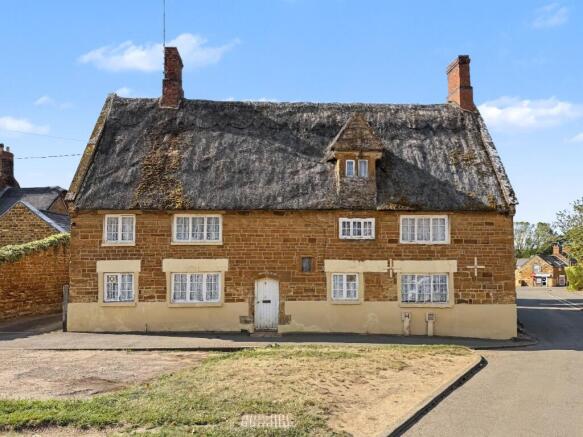
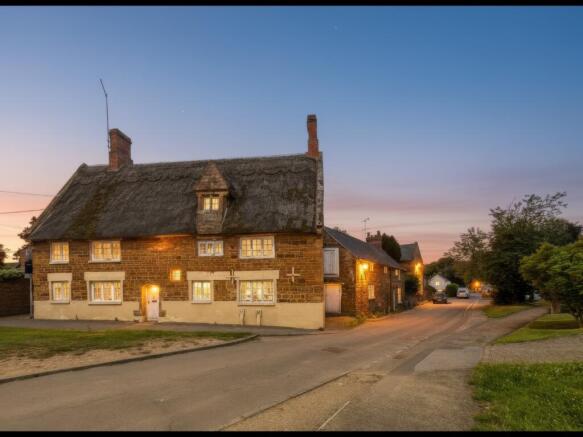
Despite the passing of more than 350 years, The Homestead is said to have retained a remarkably similar appearance to its beginnings, and standing in front of it today, you can understand why. It is the sort of home that feels properly rooted in the village, not just because of its age, but because of the life that has clearly passed through it.
IN SUMMARY
If you’re short on time, here’s the quick version… The Homestead is believed to be one of the oldest homes in Kislingbury, dating back to 1656, Grade II Listed, full of history, character and around 2,300 sq ft of space when you include the workshop areas. It has flexible accommodation over three floors, a huge lounge, a top-floor living suite, nearly 900 sq ft of workshop space and all sorts of possibilities, subject to the correct consents. It also needs work so we really do recommend reading the full details, because this is not a normal house and the story is genuinely fascinating. But for the right buyer, who loves old buildings and can see past the jobs list, this could be a very special opportunity.
THE FULL STORY…
Believed to be one of the oldest homes in Kislingbury, and dated 1656, this Grade II Listed property has stood in the village for well over three centuries. It is not polished, perfect, or pretending to be something it isn’t. It needs work, care, investment, and the right buyer with vision.
But for someone who loves old buildings, history, space, and potential, this is a very special opportunity.
The property is believed to have been built during the Commonwealth period, shortly after the English Civil War, with the date stone in the dormer gable inscribed “MHP/1656”. Historic notes suggest this may refer to Henry Marriott and his wife, giving the house a lovely human connection as well as an architectural one.
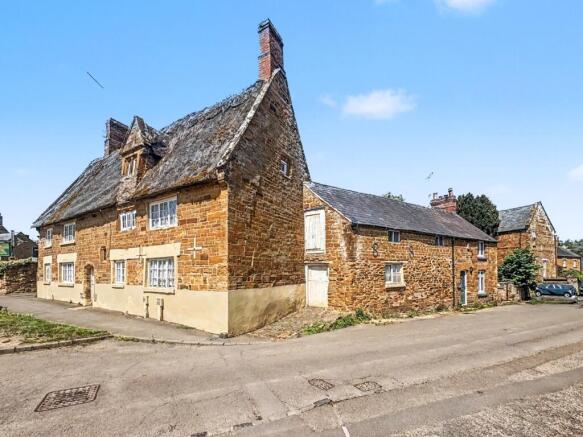
The official listing details refer to the home as being built from coursed squared ironstone, with a reed thatched roof, brick stacks, stone-coped gables, mullion windows, a Tudor-arched stone doorway, winder stairs, spine beams and a collar-truss roof. In simpler terms, it is absolutely packed with character, and much of what makes the house interesting is still there to be seen and felt.
To the best of our knowledge, the Grade II listing does not affect the workshop areas as it is not mentioned in the official listing.
Over the years, The Homestead appears to have had a long and varied life. Historical notes refer to original outbuildings including a barn, stable, cart hovel and bakehouse, suggesting this was once a property of real practical importance within the village. At one stage, it also appears to have been divided into two homes before later being returned to one dwelling. There are references to local trades too, including William Hedge, who was a grocer and baker, with one room in the house apparently once used as a shop.
There is also a lovely long-standing family connection, with the Jeffs family associated with the property for nearly 100 years from around the 1860s until the 1960s. That gives the house a real sense of continuity, and you can understand why a place like this would stay in one family for such a long time. This continued with the current owners - that is just two owners in over 150 years!
In total, the property offers around 1,400 sq. ft. of living accommodation, with almost 900 sq. ft. of additional workshop space, giving approximately 2,300 sq. ft. overall. That is a serious amount of space, and the possibilities here are genuinely exciting, subject of course to the necessary listed building consent, planning permissions, and any other approvals required.
DOWNSTAIRS
The ground floor begins with a hallway that separates the main living spaces nicely. To one side is the lounge, and this is one of the most memorable rooms in the house. Measuring around 21ft by 15ft, it is a huge room, but because of the way the beams and central support divide the space, it almost feels like two connected sitting areas. There is a wonderful old fireplace, exposed beams, thick walls, deep-set windows and all the atmosphere you would hope for in a house of this age.
This room could remain as one large family space, but it is also easy to imagine it being reworked slightly, perhaps creating a more defined snug and sitting room, subject to the right permissions. Either way, it is the kind of room that gives the whole house its personality.
Across the hall is the dining room, another characterful space with exposed beams, textured walls, a feature fireplace and a lovely sense of age. It sits between the hallway and kitchen, making it a practical everyday dining room, but it could also work beautifully as a second sitting room, reading room, or more formal entertaining space.
The kitchen sits to the far end of the ground floor. It is a long galley-style room with fitted wooden units, worktop space to both sides, room for appliances and a window seat at the far end. It is perfectly usable, but it is fair to say this is one of the areas many buyers will probably want to rethink over time.
To the rear is the porch/conservatory area, which was built over 30 years ago and currently connects the house internally to the workshop space. This could be a really useful space with improvements.
This rear section also gives access out to the courtyard garden.
THE GARDEN
The garden is north-west facing and is not huge in comparison to the size of the house, but that may actually suit a lot of buyers. It is mainly hard landscaped, making it relatively low maintenance, and it also provides access through double gates towards the workshop. Technically, there is potential to park within the garden area, although the driveway itself cannot be used for parking as the neighbouring property has a right of access. The parking area at the front of the house does not belong to the property but the owners do use it.
THE WORKSHOP
The workshop space is one of the biggest talking points here. Spread over two floors and offering close to 900 sq. ft., it has its own pedestrian access from the street via a stone ramp, as well as internal access from the house through the rear porch. For anyone who needs workshop, studio, storage, hobby or project space, this is a huge advantage.
It could potentially be used as a garage, subject to the practicalities of access and the garden remaining hardstanding. It could also become something far more integrated with the house over time. You could imagine a studio, home office suite, annexe-style space, guest accommodation, or a much larger kitchen/living area if brought into the main house properly. The possibilities are genuinely broad, but with a Grade II Listed home, it is important to be realistic: anything significant would need the correct approvals.
FIRST FLOOR
Upstairs on the first floor, the character continues. The landing gives access to the main bedroom, bedroom two, the study or dressing room, bedroom four and the family bathroom.
The main bedroom is a good-sized double with built-in wardrobes and a lovely older feel, with exposed timbers, a deep-set window and plenty of storage. Bedroom two is another spacious room, again full of character, with shelving, a window seat and exposed beams. From here, you walk through into the adjoining study or dressing room. We have not called this a separate bedroom because of the access arrangement, but it is a very useful extra space and would work well as a dressing room, nursery, study, hobby room or private sitting area.
Bedroom four is a smaller single room, but still very useful, especially for a child’s room, study or occasional bedroom. The family bathroom on this floor is also a decent size, with a bath, WC and wash basin.
SECOND FLOOR
The second floor is a real surprise. As you come up the stairs, you arrive into a generous upstairs lounge space with exposed timbers, wood panelling and a dormer-style window. It has a completely different feel to the rest of the house and could work brilliantly as a separate area for teenagers, visiting family, or even as a self-contained top-floor suite.
Off this space is bedroom three, a sizeable double room with built-in storage and sloping ceilings, along with a second bathroom with a bath, WC and wash basin. This top floor could be perfect for a relative, older child, guest space, or even as the main bedroom suite if someone wanted a bit of separation from the rest of the house.
There are some practical points worth noting too. The property is connected to mains gas central heating, and the combi boiler is around a year old. The property is on mains drainage. We understand fibre is not currently connected to the house, although it may be possible.
Overall, The Homestead is not a house for someone looking for a quick cosmetic refresh. It is a proper project, and it deserves a buyer who understands what they are taking on. But it is also a rare chance to own and shape a remarkable Grade II Listed home with genuine history, flexible accommodation, huge workshop space and a story that stretches back to 1656.
For the right buyer, this could be something incredibly special.
ABOUT KISLINGBURY
Kislingbury is a very attractive Northamptonshire village with a history that reaches back far beyond The Homestead itself. The village was recorded in the Domesday Book of 1086, under earlier versions of the name, before gradually becoming known as Kislingbury over the centuries.
The village sits around three and a half miles west of Northampton, close to the River Nene, with the old stone bridge forming part of its character and helping connect the village towards the historic Northampton to Daventry route. It is a setting that gives Kislingbury a proper village feel, while still being incredibly convenient for Northampton, Daventry and the wider road network.
There is also a fascinating Civil War connection. On the night of 12th to 13th June 1645, Oliver Cromwell and around 2,000 cavalry are believed to have arrived at Kislingbury shortly before the Battle of Naseby. For a small village, that must have been an extraordinary sight, with soldiers, horses, officers, suppliers and camp followers all gathered in and around the village before one of the most important battles of the English Civil War.
A large part of Kislingbury’s charm comes from its historic buildings, many of which date from the mid-17th century and are built from the local golden-coloured ironstone that gives the village such warmth and character. The Homestead sits beautifully within that story, not as a stand-alone period property, but as part of the historic fabric of the village itself.
Day to day, Kislingbury offers a lovely balance of village life and practicality. There are local pubs, a village hall, community facilities, countryside walks nearby and easy access back into Northampton. The River Nene and surrounding countryside give the village a softer, more rural edge, while its location makes it far more connected than some villages further out.
That is why Kislingbury works so well for buyers who want a genuine village setting, but still need access to schools, work, shops and transport links. It feels established, characterful and properly lived-in, which is exactly the sort of setting a home like The Homestead deserves.
TENURE: Freehold
COUNCIL TAX BAND: F
EPC: N/A
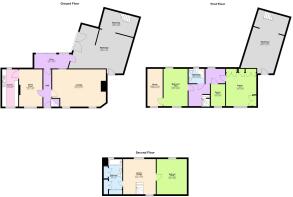
The approximate measurements for this property are as follows:
GROUND FLOOR
LOUNGE
6.67m x 4.63m (21' 11" x 15' 2")
DINING ROOM
4.60m x 1.12m (15' 1" x 3' 8")
KITCHEN
5.17m x 2.05m (17' 0" x 6' 9")
FIRST FLOOR
BEDROOM ONE
3.84m x 3.12m (12' 7" x 10' 3")
BEDROOM TWO
4.55m x 2.92m (14' 11" x 9' 7")
STUDY
4.80m x 2.10m (15' 9" x 6' 11")
BEDROOM FOUR
2.30m x 1.80m (7' 7" x 5' 11")
BATHROOM
2.10m x 1.80m (6' 11" x 5' 11")
SECOND FLOOR
UPSTAIRS LOUNGE
4.37m x 4.23m (14' 4" x 13' 11")
BEDROOM THREE
4.37m x 3.75m (14' 4" x 12' 4")
BATHROOM
4.10m x 1.86m (13' 5" x 6' 1")
WORKSHOP SPACES
PORCH
4.63m x 1.51m (15' 2" x 4' 11")
WORKSHOP
7.02m x 5.76m (23' 0" x 18' 11")
WORKSHOP
3.43m x 2.49m (11' 3" x 8' 2")
WORKSHOP
8.20m x 3.93m (26' 11" x 12' 11")