Living in Hove

Last updated: April 1, 2026
Living in Hove means enjoying the best of coastal life with a calmer feel than central Brighton. Elegant period homes, spacious seafront lawns and a thriving community give the area a distinctive charm. To picture what it’s like to live in Hove, think of independent shops and cafes, plenty of green space for four-legged friends and year‑round things to do.
Where is Hove?
Hove sits on the southern coast of England in East Sussex, forming the western half of Brighton & Hove. Its long stretch of seafront runs parallel to wide avenues and residential streets lined with Regency and Victorian architecture. With its coastal setting, residents benefit from easy access to beaches, promenades and watersports locations.
Although closely connected to Brighton, Hove has its own distinct identity. The town is known for its majestic squares, crescents and leafy communal gardens, which create a softer, quieter backdrop. This separation makes living in Hove popular with people who want Brighton’s convenience without its busiest crowds.
Its position within the Brighton & Hove area also gives residents access to strong transport links, local amenities and a well‑established cultural scene shared between the two towns.
Is Hove a nice place to live?
If you’re wondering what it’s like to live in Hove, the answer for many residents is: calm, cultured and friendly. The seafront, Hove Lawns and Hove Lagoon offer plenty of outdoor space for walking, running and sports, making it easy to enjoy the coast every day. The town’s independent cafés, boutiques and delis bring character to its high streets, while supporting a proud local community.
Hove also benefits from the quieter feel that comes with being slightly removed from Brighton’s central bustle. It balances a quieter neighbourhood with access to activities, performances and art, thanks to venues like the Brighton Open Air Theatre (BOAT) and the Hove Museum of Creativity. This combination of seaside surroundings and cultural richness contributes to its strong reputation as a great place to live.
Living in Hove appeals to a broad mix of residents, including families, professionals and those seeking a slower pace without losing city convenience.
What is Hove famous for?
Hove is well known for its historic architecture, particularly its Regency and Victorian terraces, crescents and seafront townhouses. Walking through the area feels like exploring a preserved snapshot of its grand coastal heritage, with highlights such as St Andrew’s Church and the West Blatchington Windmill.
The town also holds a unique place in film history, with some of the earliest developments in British filmmaking happening in Hove. At the free-to-enter Hove Museum of Creativity, visitors can explore early cinema innovations from filmmakers George Albert Smith and James Williamson.
Hove also benefits from a number of independent art galleries, community theatres and vibrant creative scene. The Brighton Open Air Theatre and a range of local venues enrich the area with performances, exhibitions and community events throughout the year.
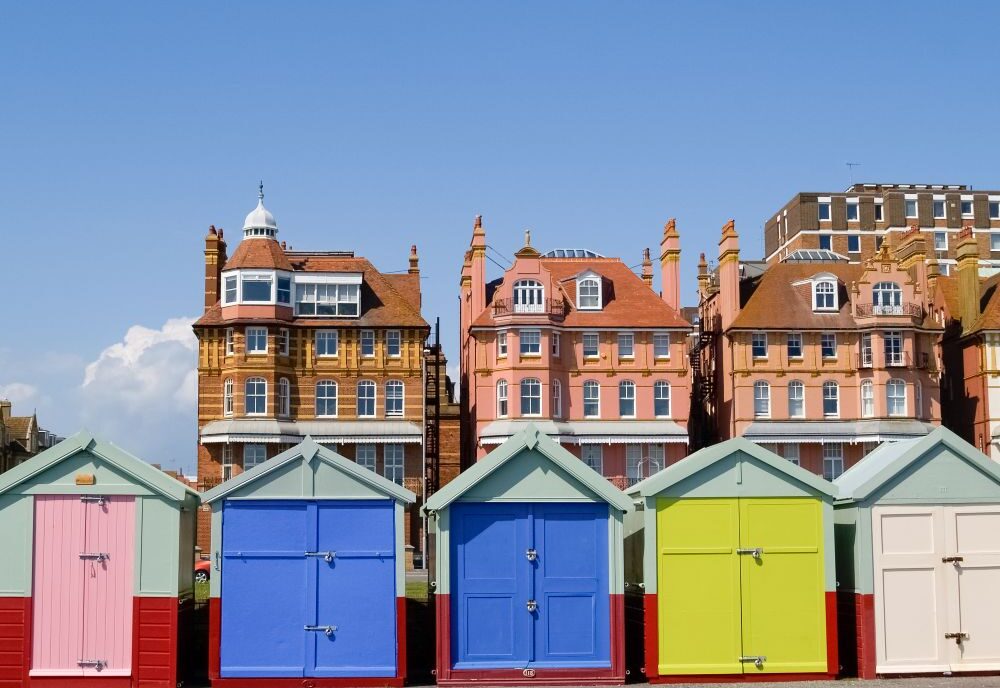
Finally, Hove’s colourful beach huts have become iconic too, symbolising the relaxed, seaside charm that makes living in Hove so appealing.
What is the transport like in Hove?
Hove is well-connected by road, bus and train links, making everyday travel straightforward. There are plenty of walking and cycle paths, with Brighton & Hove local council (School transport) actively supporting walking and cycling to work and school, offering road‑safety initiatives, cycle‑training schemes and guidance on cycling around town.
Bus routes run frequently along the seafront and through residential neighbourhoods, linking Hove with Brighton, the wider coast and local attractions. Hove railway station is a major asset too, providing direct connections to destinations across the South East.
Average commute times:
There are plenty of transport options for commuting between Hove and Brighton, with regular buses and trains connecting the two. The train journey from Hove to Brighton takes around 5 minutes.
From Hove to London, typical train journeys take around 1 hour to 1 hour 20 minutes, to either London Bridge or London Victoria train stations.
This makes living in Hove a good option for people who work in central London but want a home based by the sea.
Average house prices in Hove
As of August 2026, the average house price in Hove is £483,687. House prices can vary based on a number of factors, including the property condition, number of bedrooms, square footage, and desirability of the street.
Average rent prices in Hove
As of August 2026, the average monthly rental payment in Hove is £1,954. Prices will vary based on factors like the property facilities available, the condition of the decor and amenities, and desirability of the location in Hove.
Schools in Hove
Hove has access to plenty of schools, with the wider Brighton & Hove area having a total of 81 schools. Schools in the Hove area include Cardinal Newman Catholic School, Hove Park School and the specialist primary school, Aldrington Church of England School.
Local insight
Stephanie says: “Hove feels like the calmer neighbour of buzzy Brighton, but still with the perks of sea views and lots to do. Its Victorian terraced roads and seafront promenade give a classic English seaside town feel, but with the added benefits of independent cafes, little boutiques and craft beer pubs.
Weekends spent browsing the shops along Western Road, having lunch with a view at Rockwater, or hitting the courts at Hove Beach Park, mean you enjoy the benefits of Hove all year round.”
FAQs
-
What is Hove known for culturally?
Hove is known for its museums, galleries and independent arts scene, including the Hove Museum of Creativity, BOAT and several contemporary art spaces.
-
Are there plenty of outdoor activities in Hove?
With Hove being a coastal town and with access to East Sussex countryside, there are lots of outdoor activities on your doorstep. From watersports at Hove Lagoon and padel at Hove Beach Park, to long beach walks and ample parkland for dog walkers, there’s plenty for outdoorsy types.
-
Is Hove good for families?
With plenty of nurseries and schools in the area, Hove is well suited for new or growing families. Parents will appreciate the town’s green spaces, cultural attractions and quieter neighbourhoods.
-
How long does it take to commute from Hove to London?
Commuting to London from Hove is likely to take between 1 hour and 1 hour 20 minutes, depending on the chosen route and whether you go to London Bridge or London Victoria terminals.
-
Is it better to live in Brighton or Hove?
Both places have their strengths. Brighton is livelier, with more nightlife, tourist attractions and more frequent train connections. Hove offers a calmer atmosphere, wider residential streets, quieter beaches and a strong community feel. People who want more space and a slower pace often prefer living in Hove, while those seeking buzz and more amenities may lean toward Brighton.
View all area guides

Written by Stephanie Mitchell, Rightmove Editorial Team
Stephanie leads Rightmove’s Content Team, with over a decade of… Read moreCopyright © 2000-2026 Rightmove Group Limited. All rights reserved. Rightmove prohibits the scraping of its content. You can find further details here.