Are our homes really getting greener?
Key summary:
- 46% of properties for sale and 58% of rentals are rated EPC C or above
- Average annual energy bills for EPC A rated homes are £571 for homes rated EPC A, rising to £6,368 for EPC G
- 58% of people say they are motivated to make green home improvements for a better quality of life
- While progress has been made, there’s been no big jump in homes going greener, despite a big policy push
Our Greener Homes Report is now in its fourth year, tracking how sustainable property trends are shaping up across the country. This year’s analysis draws on 17 million EPC certificates, nearly 30 million property listings, and insights from over 1,200 UK consumers.
So, what’s happening? What’s slowing things down? And what do homeowners, renters and landlords really think? Let’s dive in.
EPCs are improving, but progress has slowed
Back in 2015, just 29% of resale homes and 41% of rentals had an EPC rating of C or above. Fast forward to 2025 and those numbers have climbed to 46% and 58% respectively. Good news, right?
Well, yes and no. Progress has slowed in recent years. Despite government schemes and growing awareness, many people are hesitant to invest in green tech, often because of cost and complexity.
The rental market tells the story clearly: between 2015 and 2020, EPC C ratings jumped by 11%. From 2020 to 2025? Just 6%. Even with policy pushes, improvements have slowed .
Our property expert, Colleen Babcock, says: “Policy ambition hasn’t translated into real-world acceleration. We might have expected green improvements to speed up in the rental sector following policy pushes, but the data shows progress over the past five years has been slower than the previous five.
“For landlords, the challenge is balancing compliance with cost and potential value appreciation, and for renters, it’s about finding homes that deliver real savings. Energy efficiency isn’t just good for the planet, it’s good for the pocket too, and making it easier to achieve will be key to unlocking faster change.”
On the bright side, half of all green upgrades made in the past five years happened in the last year – a sign that some landlords are taking action despite uncertainty around future legislation.
Read more about EPC requirements for rental homes
Why the hesitation?
84% of people say EPC ratings matter, yet half of homeowners and nearly two-thirds of renters don’t know their property’s rating. Carbon-cutting motivation is also slipping, AS only 42% cite it as a reason for making changes, while cost savings dominate at 83%.
Practical worries are growing too: disruption during works is now a bigger barrier than before. And while awareness is high, belief in the value of green upgrades isn’t keeping up – 37% of homeowners say EPC ratings won’t influence their next purchase.
Still, there are positives:
- 58% want green upgrades for a better quality of life
- 30% believe they add value
- 19% think they make homes more attractive to buyers
What’s living in a green home really like?
We spoke to households to work out what life’s like beyond the stats. From what it can do to your bills, to how it changes day to day life.
Megan, London, lives with solar panels and a biomass system:
“I used to think green tech was unreliable, expensive, and only for wealthy or eco-conscious households. But it’s been the opposite. My home stays comfortably warm and cool, and I don’t pay for heating, hot water or electricity because everything runs on green technology. It’s 100% worth it. It saved me money and even helped me get on the property ladder, as my lender could see I wouldn’t have high energy bills.”
Matt, West Sussex, living with solar panels:
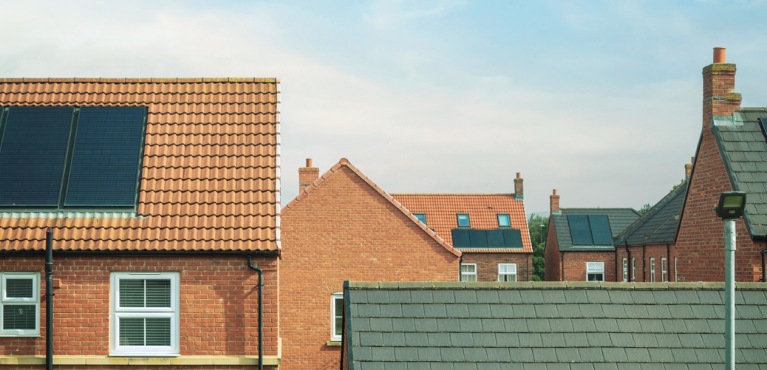
“We didn’t choose solar, it came with the property, but when we saw how much power the panels generated and that excess was sold back to the grid, it felt like a real bonus. On a sunny summer’s day, we don’t pay for electricity between 7am and 8pm. In peak months, we made over £300 by selling excess power back to the grid. It’s hassle-free, low-maintenance, and gives you a real kick when the sun’s shining, you’re saving money and CO2, and even making a bit back.”
Malcolm, West Cumbria, living with solar panels and battery storage:
“We were drawn to green tech for the energy savings and protection from price hikes, but we were nervous about the upfront cost and whether it would be worth it. The difference has been incredible. We now run the house and an electric car for a fraction of the cost thanks to smart meters and off-peak tariffs. Our total bill for gas, electricity and car charging is around £100 a month, and we even get paid for selling excess solar power. If you’re considering it, take the plunge, you won’t be disappointed.”
Want to make your home greener?
Mentions of green tech in property listings are climbing– heat pumps are up 46%, solar panels up 37% year-on-year. And the savings by going greener at home can be big: homes with the highest EPC rating of A have average annual energy bills of £571, compared to £6,368 for EPC G. the lowest-rated homes. Check average bills for your property type and EPC rating in our energy bill tracker.
Checking your EPC via the government website is a good place to start – if your home has a valid EPC on the register, it will show you recommendations for how to improve. Then explore government schemes like the Boiler Upgrade Scheme, which was recently expanded to include even more green heating solutions.
For more tips, check out our guides to going greener at home.